
WELCOME BONUS 300%
UP TO €2000 + 100
FREE SPINS
UP TO €2000 + 100
FREE SPINS
Home → Blackjack
Blackjack at QuickWin Casino: Variants, Rules and Payouts
What a Natural Blackjack Practically Pays Out
Blackjack Liberal Vegas Strip pays 3:2 for a natural hand, meaning a 100 EUR bet returns 150 EUR in winnings. This payout structure is significantly more favorable than the 6:5 ratio found in other variants, which would only return 120 EUR for the same stake. The difference of 30 EUR per winning hand directly reduces the house edge to 0.28% when combined with liberal rules like S17 and DAS.
In contrast, the variant paying 6:5 instead of 3:2 adds exactly 1.39 percentage points to the casino's advantage over the player. This specific rule change increases the house edge from 0.28% to 1.85%, making it one of the most costly adjustments in the game. A 10 EUR wager on this table yields only 12 EUR profit on a blackjack, compared to 15 EUR on the standard table.
The single-deck classic version offers an RTP of 99.85% and a house edge of just 0.15%, provided it maintains the 3:2 payout. Fewer decks generally lower the house advantage by approximately 0.48 percentage points compared to eight-deck games. Players must verify the payout ratio, as some single-deck games compensate for the mathematical edge with inferior 6:5 payouts.
Stand-on-17 Rule and Its Meaning for Players
The six-deck variant featuring S17 requires the dealer to stand on all 17s, including soft 17, which improves the player's odds. This rule contributes to an RTP of 99.54% when the player utilizes optimal basic strategy throughout the session. Standing on soft 17 prevents the dealer from improving weak hands, thereby reducing the frequency of dealer busts being avoided.
Switching to H17, where the dealer hits soft 17, worsens the player's position by adding 0.22 percentage points to the house edge. This modification means the casino retains a larger share of the total amount wagered over time compared to the S17 variant. The difference is purely statistical, affecting the long-term expected return rather than individual short-term outcomes.
Resplitting Aces (RSA) and Doubling After Split (DAS) further modify the baseline expectations established by the stand rule. RSA improves the RTP by 0.08 percentage points, while DAS adds another 0.14 percentage points of value to the player. These additional permissions are crucial for maximizing returns in tables that otherwise feature standard restrictions.
Mobile version needs 1 Mbit bandwidth
Lightning Blackjack requires a stable connection to handle real-time video streams and instant multiplier updates up to 25x. Evolution provides this live table with bets ranging from 1 to 2,500 EUR, demanding consistent data throughput for smooth operation. A minimum bandwidth of 1 Mbit is necessary to prevent lag that could disrupt betting decisions during fast-paced rounds.
Quantum Blackjack Plus Live features multipliers up to 1,000x on three-card combinations, requiring substantial data processing power from the client device. Playtech delivers this high-stakes table with limits between 1 and 5,000 EUR, ensuring high-quality graphics do not drop frames. Insufficient bandwidth may cause the quantum cards to fail loading, potentially voiding special wins or causing disconnection.
Blackjack Party operates with two moderators creating a party atmosphere, which adds audio overhead to the video stream requirements. Evolution sets the betting range from 1.00 to 1,000 EUR, making it accessible but still dependent on network stability. Maintaining the 1 Mbit threshold ensures that chat interactions and visual cues remain synchronized without buffering interruptions.
What Push Means: Stake Returns to You
A push occurs when the player and dealer finish with the same total, resulting in the immediate return of the original wager. In the 6-deck S17 game, this outcome is factored into the 0.46% house edge calculation under standard basic strategy. No money changes hands, and the round concludes without a win or loss for either party.
Surrender rules alter the financial impact of difficult hands, though early surrender is largely removed from modern offerings. Late surrender allows players to forfeit half their bet after the dealer checks for blackjack, improving RTP by 0.08 percentage points. This option is less valuable than early surrender, which can reduce the house edge by up to 0.6 percentage points.
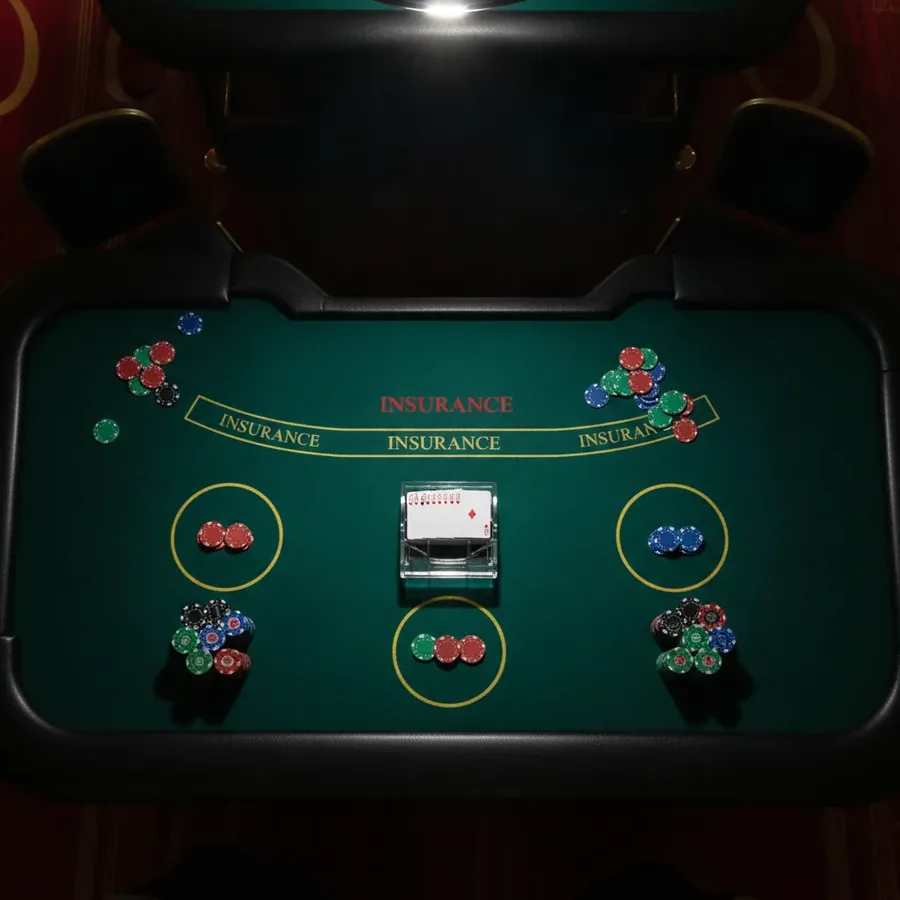
Insurance bets function separately from the main hand outcome and often result in a net loss unless the dealer holds blackjack. This side bet pays 2:1 but carries a house edge of 7.47% in six-to-eight-deck shoes, significantly dragging down overall returns. Basic strategy dictates always rejecting insurance unless the true count exceeds +3 in card counting scenarios.
Early Surrender is removed from many tables
Early surrender allows players to forfeit half their bet before the dealer checks for blackjack, offering a significant strategic advantage. This rare rule can improve the player's RTP by up to 0.6 percentage points compared to late surrender options. Most modern casinos have eliminated this variant in favor of less favorable late surrender or no surrender policies.
Late surrender permits forfeiture only after the dealer verifies they do not hold an initial blackjack, reducing its value considerably. The benefit is limited to improving RTP by approximately 0.08 percentage points, far less than the early variant. Players relying on this rule find fewer suitable tables, as operators prefer to minimize the mathematical edge given to skilled participants.
The removal of early surrender shifts the balance further toward the house, particularly in high-variance situations. Tables now typically offer only the standard 3:2 or 6:5 payouts without the protective buffer of early exit. Consequently, players must rely strictly on basic strategy to mitigate the increased house edge inherent in these restricted rule sets.
Blackjack variants at a glance
| Variant | Payout | House edge | Rule | Bet range |
|---|---|---|---|---|
| Blackjack Liberal Vegas Strip (liberale Regeln, 3:2) | 99.72% | 0.28% | Günstigste Regelkombination: S17 + DAS + Resplit + Late Surrender. Standardabweichung 1,15 | Blackjack 3:2, Gewinn 1:1 |
| Blackjack Split / Double / H17 – Regel-Effekte | n.a. (Regel-Modifikatoren) | H17 +0.22 Prozentpunkte; RSA −0.08 Prozentpunkte; DAS −0.14 Prozentpunkte | Dealer Hits Soft 17 verschlechtert RTP um 0.22 Prozentpunkte; Resplit Aces verbessert um 0.08 Prozentpunkte; Double After Split verbessert um ca. 0.14 Prozentpunkte; 6 Decks statt 8 – ca. 0.02 Prozentpunkte. | Double – Einsatz ×2 mit einer Karte; Split – bis 4 Hände; Ass-Split meist mit einer Karte. |
| Blackjack Ein Deck, klassische Regeln, 3:2 | 99.85% | 0.15% | Weniger Decks = niedrigerer Vorteil; ein Deck gibt ca. −0.48 Prozentpunkte gegenüber 8 Decks. Oft durch 6:5 Auszahlung kompensiert. | Blackjack 3:2, Gewinn 1:1 |
| Blackjack 6 Decks, S17, DAS, DOA, Auszahlung 3:2, Basisstrategie | 99.54% | 0.46% | Dealer steht auf Soft 17; Verdopplung auf jeder Zweierkarte; Verdopplung nach Split erlaubt; keine Aufgabe. Basisstrategie ist für diesen Wert zwingend | Blackjack 3:2, normaler Gewinn 1:1, Insurance 2:1 |
| Blackjack Auszahlung 6:5 statt 3:2 (6 Decks) | 98.15% | 1.85% | Ersatz von 3:2 durch 6:5 fügt exakt +1.39 Prozentpunkte zum Vorteil des Casinos hinzu – stärker als jede andere Regeländerung. Bei $10 Einsatz zahlt Blackjack $12 statt $15. | Blackjack 6:5, Gewinn 1:1 |
| Blackjack Insurance / Versicherung (6–8 Decks) | 92.53% | 7.47% | Separate Nebenwette bis 50% der Hauptwette, wenn der Dealer ein Ass hat. Basisstrategie schreibt IMMER Ablehnung vor (außer Karten zählen bei True Count ≥ +3). Bei einem Deck Vorteil ≈ 5.88% | Insurance 2:1 |
Four hours of play with 300 EUR bankroll
The casino offers a 300% welcome bonus up to €2,000 plus 100 free spins. This promotion significantly increases the initial deposit value for new players seeking extended gameplay sessions. The bonus funds are subject to specific wagering requirements that must be met before withdrawal.
Table games contribute only 10% toward the bonus turnover requirement, whereas slots count for 100%. This low contribution rate makes blackjack variants like Quantum Blackjack Plus Live less efficient for clearing bonuses. Players must generate four times the bonus amount in eligible wagers to unlock withdrawals.
A three hundred euro bankroll allows approximately two hundred bets at standard table limits. The house edge varies by variant, with Lightning Blackjack offering an RTP of 99.56%. Managing the bankroll across four hours requires strict adherence to betting limits and game selection strategies.
Continuous Shuffling Machine shuffles after each round
Quantum Blackjack Plus Live utilizes a Continuous Shuffling Machine (CSM) to maintain game integrity. The dealer reshuffles the deck immediately after every single hand is completed. This process ensures that card counting strategies remain ineffective against the random distribution of cards.
Blackjack Surrender rules allow players to forfeit half their bet if the dealer has blackjack. The CSM prevents tracking previous cards, making late surrender decisions purely based on current visible cards. This rule improves the RTP by approximately 0.08 percentage points compared to standard play.
Insurance bets pay 2:1 but carry a high house edge of 7.47% for six to eight decks. The continuous shuffle eliminates any advantage from counting true counts above positive three. Players should generally reject insurance unless they possess advanced counting skills rarely applicable here.
Splitting costs double bet: plan budget
Resplitting Aces provides a benefit of minus 0.08 percentage points to the house edge. However, splitting pairs often requires placing additional bets equal to the original stake. Players must ensure their bankroll can support multiple simultaneous hands during active splits.
Double After Split (DAS) improves the RTP by approximately 0.14 percentage points. This rule allows doubling down on split cards, increasing potential returns on strong starting hands. The cost of splitting effectively doubles the exposure for each new hand created during the round.
Blackjack Party tables by Evolution offer a lively atmosphere with two live moderators. The minimum bet starts at one euro while maximums reach one thousand euros per hand. Players should calculate total potential loss when splitting into four separate hands at higher stakes.
Double Down vs Simple Hit on 11
Doubling down on hard eleven typically yields higher long-term profits than simply hitting. The strategy involves doubling the initial wager to receive exactly one additional card. This aggressive move capitalizes on the statistical probability of drawing ten-value cards.
Liberal Vegas Strip rules allow doubling on any two cards for optimal return. The RTP reaches 99.72% with favorable conditions like soft seventeen standing rules. Players should always double on eleven unless the dealer shows an ace requiring insurance consideration.
Lightning Blackjack adds multipliers up to twenty-five times on winning hands. These side bets increase volatility but do not alter basic doubling strategy on eleven. The base RTP remains ninety-nine point five percent without multiplier triggers affecting core decisions.
Double Down after Split: which tables allow it
Standard Blackjack Party tables do not explicitly list Double After Split permissions in their overview. Players must verify specific rules before engaging in complex split strategies during gameplay. Lack of DAS reduces the overall expected return compared to more liberal variants available elsewhere.
Blackjack Auszahlung 6:5 variants often restrict doubling options to improve the house advantage. The sixty-to-fifty payout adds 1.39 percentage points to the edge alone. Restricting DAS further penalizes players who attempt to maximize value through strategic splitting.
Quantum Blackjack Plus Live allows optimal strategy execution including DAS for better returns. The RTP of 99.57% assumes perfect play with all available rule advantages. Checking specific table rules ensures players utilize DAS where permitted to minimize long-term losses.
How long does a Live Blackjack round take?
The Evolution provider Lightning Blackjack allows unlimited players to join the table, with stakes ranging from 1 EUR up to 2,500 EUR per hand. This high limit structure supports rapid gameplay where lightning multipliers can reach up to 25x on winning hands. Consequently, each round concludes quickly as the dealer resolves the special multiplier effects before dealing the next cards. The process ensures high turnover for bonus wagering requirements.
The Playtech Quantum Blackjack Plus Live variant operates with higher stakes between 1 EUR and 5,000 EUR, offering quantum multipliers up to 1,000x. These multipliers apply specifically to three-card combinations totaling 21 points during the game. Players experience a slightly longer duration due to the calculation of these rare high-value payouts. This extended time affects the total number of rounds completed within a fixed wagering period.
The standard Blackjack Party table hosted by Evolution features a betting range from 1.00 EUR to 1,000 EUR. Two moderators manage the party atmosphere while dealing cards at a steady pace. The presence of two hosts adds procedural steps that extend the average round duration compared to solo tables. This slower pace reduces the hourly volume of eligible bets for clearing bonus funds.
Insurance vs Even Money on Own Blackjack
The insurance side bet pays out at odds of 2:1 when the dealer shows an ace as their upcard. This separate wager is limited to 50% of the original main stake placed on the blackjack hand. Accepting this option significantly lowers the theoretical return because the house edge rises to 7.47%. It is generally discouraged in optimal strategy unless counting cards reveals a true count of +3 or higher.
Even money is essentially an early payout of the insurance bet when the player holds a natural blackjack. If the dealer also has a blackjack, the player receives a 1:1 payout immediately rather than waiting for verification. This guarantees a profit equal to the original stake without risking the full amount on a push. The mathematical expectation remains identical to declining even money and letting the hand play out normally.
The basic strategy explicitly mandates always rejecting insurance offers for regular hands lacking a natural twenty-one. Taking insurance on non-blackjack hands increases the overall house advantage substantially over the long term. For a single-deck game, the disadvantage associated with this side bet is approximately 5.88 percent. This negative expectancy makes it a poor choice for minimizing the cost of meeting wagering requirements.
Shoe, Cut Card, and 75 Percent Penetration
The cut card determines the point at which the dealer must shuffle the remaining cards in the shoe. Standard penetration often reaches 75 percent before the reshuffle occurs to ensure fairness and randomness. This depth allows skilled players to gain a slight edge through card counting techniques if applicable. Most online live tables do not disclose exact penetration rates, affecting strategic depth assessments.
Reshuffling after 75 percent penetration limits the effectiveness of tracking card distributions throughout the entire deck. A deeper penetration would allow more accurate predictions of remaining high-value cards in the shoe. However, frequent shuffling maintains a consistent house edge regardless of previous outcomes in the session. This mechanism protects the casino from professional advantage players utilizing complex counting systems effectively.
The specific rules for the six-deck game include standing on soft 17 and doubling after splitting allowed. These conditions contribute to a base house edge of 0.46 percent when basic strategy is followed perfectly. The penetration rate interacts with these rules to determine the actual variance experienced by the player. Lower penetration reduces the potential benefit of favorable deck compositions during later stages of the hand.
How many decks are in the shoe?
The primary six-deck blackjack variant uses exactly six standard packs combined into a single continuous shoe. This configuration results in a theoretical return to player percentage of 99.54 percent under optimal play. The use of multiple decks increases the house edge slightly compared to single-deck games due to reduced flexibility. Players must adhere strictly to basic strategy to maintain the lowest possible disadvantage against the dealer.
Single-deck games offer a superior theoretical return of 99.85 percent with a house edge of only 0.15 percent. Using fewer decks reduces the probability of drawing low cards that hinder doubling opportunities for the player. This advantage is often negated by less favorable rules such as paying 6:5 for blackjacks instead of 3:2. The shift in payout structure adds 1.39 percentage points to the house edge, outweighing the deck reduction benefit.
Eight-deck variations typically present a higher house edge compared to six-deck or single-deck configurations available at the site. Each additional deck introduces more low cards that dilute the player's ability to capitalize on favorable situations. The difference between one deck and eight decks amounts to approximately 0.48 percentage points in favor of the player. Choosing the fewest decks maximizes the expected value for every euro wagered on the table.
Soft Hand and Hard Hand Practically Distinguished
A soft hand contains an ace counted as eleven without causing the total to exceed twenty-one. This flexibility allows players to hit without immediate risk of busting on the next card drawn. Doubling down is permitted on any two-card starting hand, including those consisting of an ace and any other card. This rule significantly improves the player's expected outcome compared to restrictions found in other variants.
A hard hand lacks an ace or contains an ace forced to count as one to avoid busting. Players must hit until reaching seventeen or higher, as standing on lower totals yields negative expected value. The dealer stands on all sixteen and below but hits on soft seventeen in some variations. Hitting on soft seventeen increases the house edge by 0.22 percentage points compared to standing rules.
Doubling after splitting is allowed, providing additional opportunities to increase wagers on favorable hard or soft totals. Resplitting aces is typically restricted to receiving only one additional card per new hand created. This limitation prevents players from creating multiple strong hands from a single pair of aces. The combination of these rules defines the specific strategic path required to achieve the stated 99.54 percent RTP.
Contact
Live - online chat
Banking


Providers


QuickWin Casino 2026